


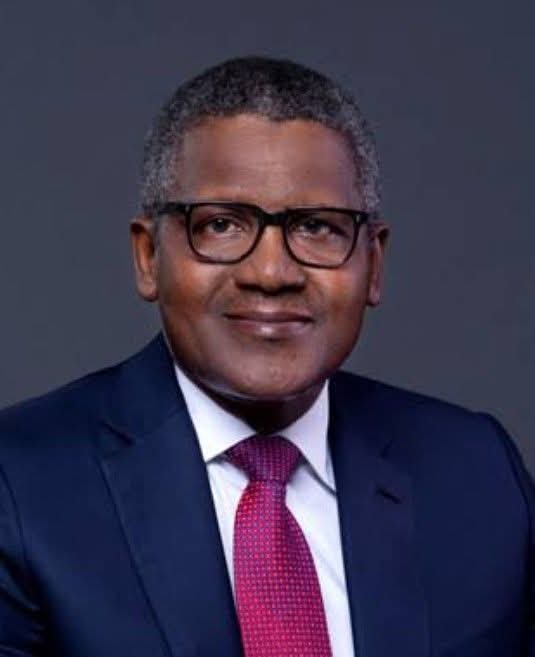
President and Chairman of Dangote Industries Limited, Aliko Dangote, has called on the Federal Government to urgently convene a national retreat to address Nigeria’s persistent electricity crisis, warning that unreliable power supply poses a serious threat to industrialisation and economic growth.
Dangote made the appeal on Tuesday at the official launch of the National Industrial Policy 2025 in Abuja, themed “From Policy to Productivity:
Implementing Nigeria’s Industrial Future.” The event drew senior government officials, business leaders and development partners, with President Bola Tinubu represented by Vice President Kashim Shettima.
‘Power Means Growth’
In his goodwill message, Dangote stressed that stable electricity remains the foundation of any thriving economy.
“One of the things I want to advise is to call a national forum where we will have a one- or two-day retreat and resolve the issues of power. Because without power, there is no way any country can create growth or jobs. Power means growth. No power, no growth,” he said.
His remarks were met with applause from participants, underscoring widespread concern within the organised private sector over Nigeria’s power challenges.
Dangote acknowledged that government policies aimed at promoting industrialisation were commendable but insisted that without reliable electricity, such policies would not achieve their intended impact.
Manufacturers Strained by Energy Costs
He lamented that many manufacturers now spend more on generating electricity than on actual production due to erratic supply from the national grid.
“You have to build your own power plant and still keep a standby. That does not make sense. There is nowhere you can get prosperity that way,” he said, noting that businesses are increasingly dependent on diesel and alternative energy sources to stay afloat.
His comments come on the heels of a recent five-day disruption in power supply linked to gas maintenance activities. Several generation plants experienced gas shortages during the period, leading to widespread blackouts and renewed anxiety among manufacturers and households.
Call for Protection of Local Industries
Beyond electricity, Dangote urged the government to strengthen protection for domestic industries against excessive imports and dumping.
“Even if you give zero-interest loans and free land, without protection, no industry will survive. Importation of anything is importation of poverty and exportation of jobs,” he warned.
He argued that reducing Nigeria’s dependence on imports and boosting local production would not only create jobs but also strengthen the naira and improve economic stability.
“We should manufacture what we consume. That is the only way to create jobs,” he said.
Private Sector as Key Driver
Dangote also highlighted the dominant role of the private sector in Nigeria’s economy, stating that it contributes nearly 90 per cent of the country’s GDP.
“Nigeria is the only country in Africa where the private sector is bigger than the government in terms of contribution to GDP. We have what it takes to create massive consumption, industry and disposable income,” he said.
While calling for stronger collaboration between government and businesses, he added that entrepreneurs must fulfil their obligations by paying taxes and complying with regulations, describing the relationship as a “joint venture.”
Optimism Amid Reforms
The industrialist expressed optimism about recent economic reforms, saying improved currency stability and clearer policy direction were already boosting investor confidence.
He, however, reiterated that stable electricity supply remains the single most critical factor for unlocking Nigeria’s industrial potential and ensuring the success of the National Industrial Policy 2025.
“It takes a truly patriotic person to say, I love to produce diesel, but I would rather there is constant power so I won’t have to,” Dangote concluded.
Nigeria continues to grapple with recurring electricity shortages caused by gas constraints, infrastructure vandalism and maintenance shutdowns — challenges experts say must be resolved if the country hopes to position itself as a leading manufacturing hub in Africa.